Artificial intelligence
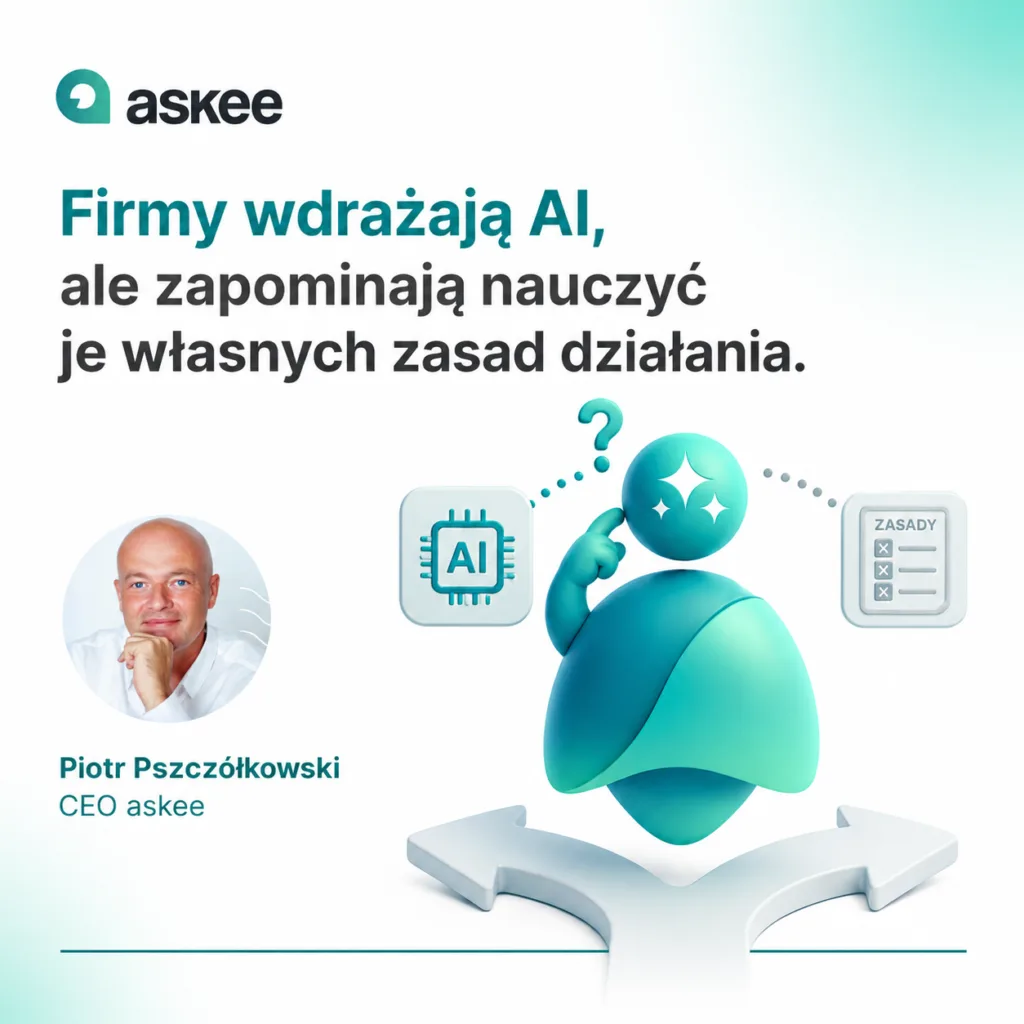
Companies roll out AI but forget to teach it their own operating rules.

Does ROI from AI really depend on the technology? More and more companies are measuring their return on investment, but the data shows that organizational maturity is what matters. AI accelerates what already exists – good processes or hidden chaos. So the real question is not “how much will we earn?”, but “are we ready for a change in decisions, accountability and pace?”.
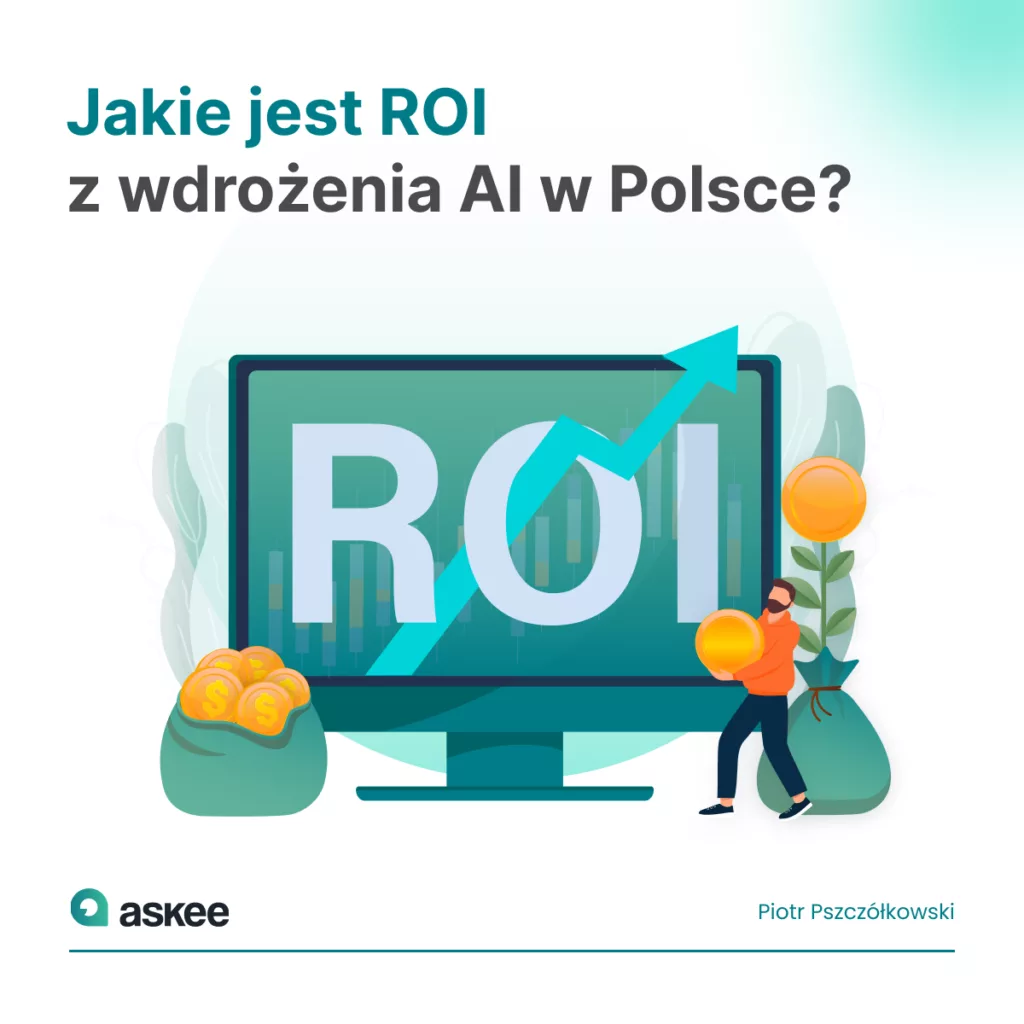


Deloitte’s report “Return on investment in AI: the Polish perspective” shows that more and more organizations in Poland are trying to measure the effects of their AI rollouts. That is a very good direction. The discussion about artificial intelligence is ceasing to be a conversation about potential and becoming a conversation about numbers, productivity and impact on the bottom line.
The problem, however, is that the ROI from rolling out AI assistants does not come from the technology alone. To a large extent it reflects a company’s organizational maturity.
AI accelerates what already exists in the organization. If processes are in order, roles clearly defined and accountability transparent – the technology reinforces that order. If, on the other hand, the structure is blurred, decisions drag on and accountability is ambiguous – AI will accelerate that too. Only in the direction of chaos.
McKinsey & Company’s report “The State of AI 2025” shows that companies achieving the highest return on AI investment share several traits: a high level of process maturity, clearly defined decision-making roles and a data-based culture. Organizations that roll out AI without first putting their operating structure in order are far less likely to report a real impact on EBIT or revenue.
Similar conclusions come from Gartner’s 2025 report on scaling AI in enterprises. Gartner indicates that one of the main reasons AI projects fail to move from pilot to organizational scale is a lack of organizational readiness – not technological readiness. Companies invest in tools but do not redefine how decisions are made or how accountability is divided.
In Poland we are still at the stage of intensively testing tools. We check which solutions work faster, which generate better summaries, which integrate with our systems. That is a natural stage of adoption.
The real return on investment, however, will begin when we start testing not only the tools, but ourselves.
Is the company structure ready for faster decisions?
Is the accountability that comes with roles clearly defined?
Are we ready for transparency of data?
Does the organizational culture allow the way we work to change?
Perhaps the question “what is the ROI of adopting AI?” should be replaced by another: “are we ready – and how ready – for the consequences of it actually working?”.
Why does this matter so much?
Because AI that is effectively rolled out changes the dynamics of an organization. It speeds up analysis, shortens reaction times and reduces the need to verify the same information over and over. Cost optimisation is often a side effect of a deeper change – a change in the way decisions are made.
And changing decisions means changing power.
If data is available faster and in a clearer form, the role of intuition shrinks. If the assistant points out bottlenecks and delays, inaction is harder to hide. If a process is measurable in real time, accountability becomes visible.
This is the point at which many organizations stop. Because AI stops being a technology project. It becomes a transformation project.
IBM’s “Global AI Adoption Index 2025” report shows that companies which combine AI rollouts with changes to operating models and decision structures achieve a higher return on investment than those treating AI as an add-on to their existing way of working.
The conclusion is demanding, but clear.
ROI from AI does not depend on the quality of the algorithm alone. It depends on the organization’s readiness for acceleration, transparency and a shift in accountability.
The technology can be effective.
The question is: is the company ready for that effectiveness to actually change something?