Artificial intelligence
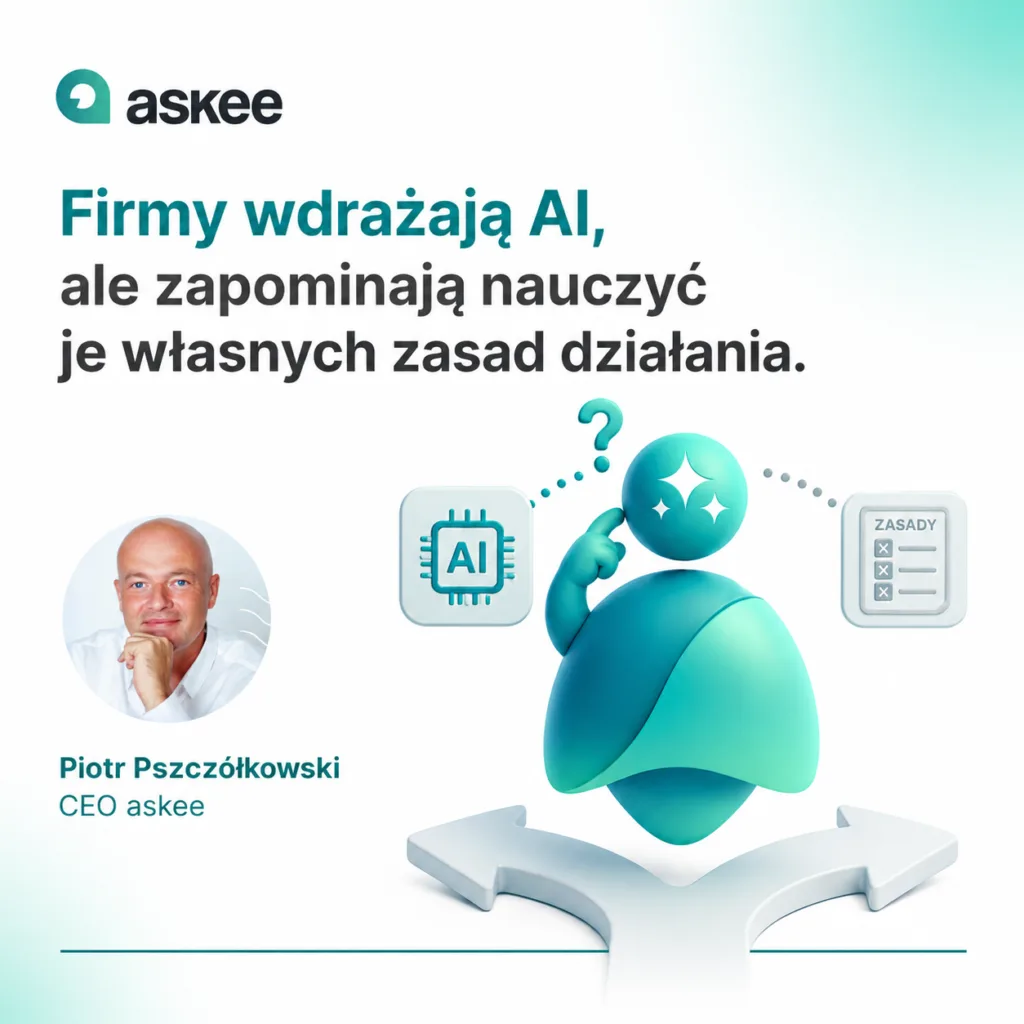
Companies roll out AI but forget to teach it their own operating rules.

Most AI tools can generate answers, but few of them understand the realities of a specific organization. Real value begins when the assistant knows the procedures, roles and accountabilities and works within the rules that have been set. AI in a company cannot be an add-on or a chatbot – it should become part of the decision-making infrastructure. The advantage does not come from the technology, b...
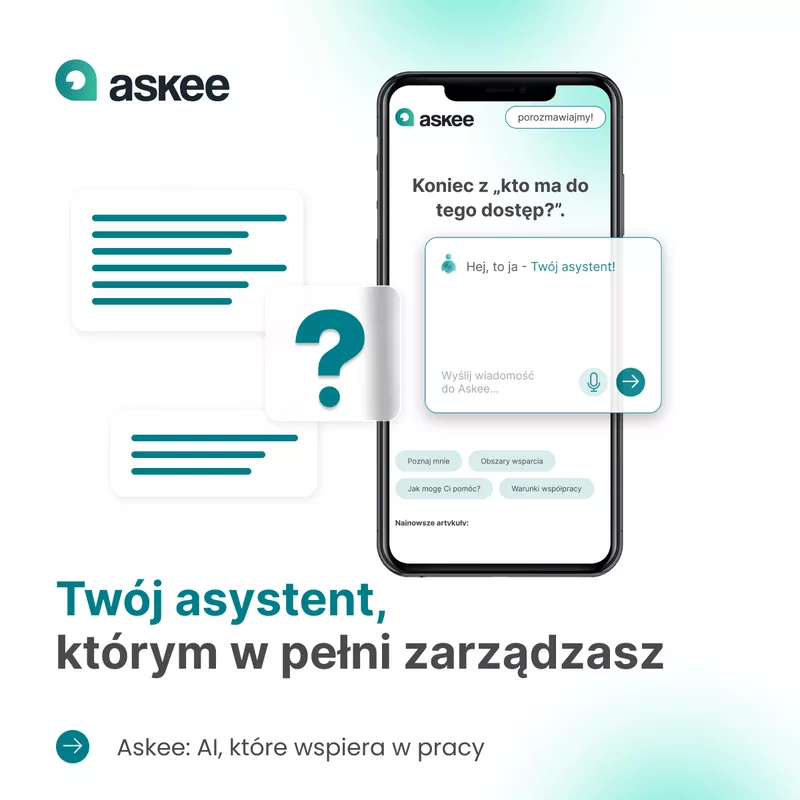


Imagine an assistant that not only “knows about AI”, but knows your organization.
It knows your procedures.
It understands the structure of roles and accountability.
It communicates in the language people in your company actually use.
And most importantly – it does not go beyond the rules you have set.
This is exactly where the difference between a general language model and an organizational assistant begins.
Most AI tools work on the basis of general knowledge. They are great at generating content, summaries or ideas. The problem appears when they are meant to support real operational decisions: interpreting procedures, pointing to the right next steps, watching over policy compliance or assigning accountability.
In an organization, context matters more than the answer itself.
An assistant that does not know the internal rules may sound convincing – but it will not necessarily be consistent with how the company actually works. That is why the key question is not only “does the AI answer”, but: on what basis does it answer and on whose behalf.
Askee was designed precisely as a context-aware assistant.
It is a system you configure to fit your needs:
If you need concrete, matter-of-fact communication – you can set that up.
If what matters is walking an employee step by step through a new procedure – the assistant can act as an operational guide.
If the priority is closing cases, watching deadlines and pointing to task owners – it can support accountability and follow-through.
In practice this means moving AI from the level of “a tool that supports a process” to the level of “a layer that supports decisions”.
A good AI assistant should work the way the organization works – in its logic, in its structure, in its operational rhythm. That requires control over the data, over the scope of answers and over how the system behaves.
With askee, that control stays with the company. The organization defines the rules, knowledge sources, roles, permissions and priorities. AI does not replace processes – it works within them, reinforcing consistency and shortening the time it takes to decide.
AI technology is now widely available. The real advantage, however, is not access to a language model, but the way it is embedded in a real business context.
An assistant that knows your organization is not an add-on to a system.
It becomes part of the decision-making infrastructure.
And that is where its real value begins.