Artificial intelligence
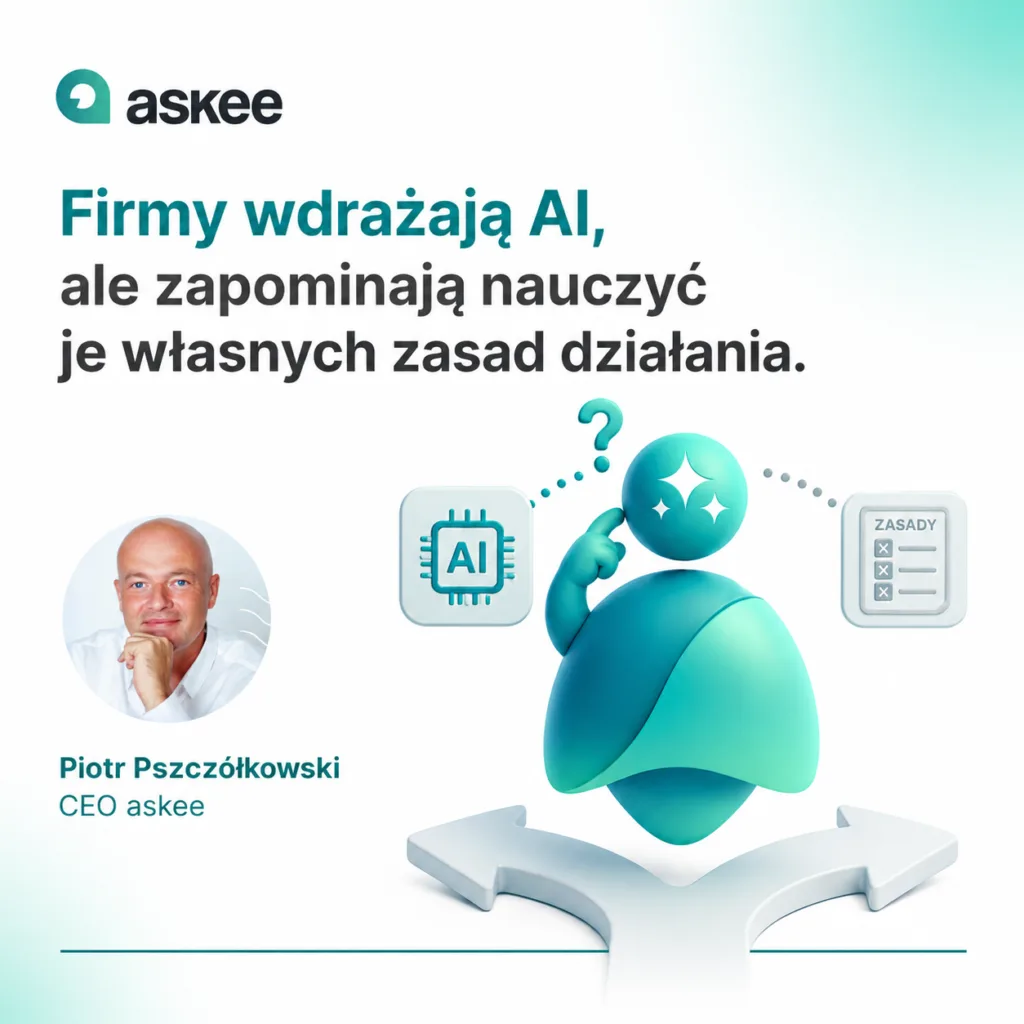
Companies roll out AI but forget to teach it their own operating rules.

Why is the biggest threat in AI not its “imperfection” but its excess of capability? What does access control really mean in an era of assistants that combine data in seconds? And why can the absence of permissions become a strategic advantage for an organization? If AI is to support the business, it has to work within clearly defined boundaries – and that changes how we think about rollouts.


AI in a company does not have to be “the smartest one in the room”. In practice, discipline and clear boundaries matter far more than omniscience.
Does that sound counter-intuitive? And yet it is the lack of control, not the lack of knowledge, that is today one of the biggest risks in rolling out AI.
Organizations talk a great deal about access to knowledge, system integration and connecting data. They talk far less often about the boundaries of access. About who can see what. About whether an AI assistant should see everything simply because it is technically possible.
Meanwhile, the greatest risk in AI is not that the system does not know the answer. The risk appears when it has access to too broad a range of information – and starts working with data it should not be combining in a given role.
IBM’s “Cost of a Data Breach 2025” report shows that the average global cost of a data breach continues to rise, and that excessive access permissions and a lack of data segmentation are among the key factors increasing the scale of incidents. Deloitte’s “Tech Trends 2025” study, in turn, indicates that governance and control over the use of AI are becoming one of the main priorities for boards – not because of the technology itself, but because of regulatory and reputational accountability.
The conclusion is simple: the problem is not that systems are not intelligent enough. The problem is the absence of rules.
AI in a company does not have to know everything. It does not have to be “the smartest”. It should work within exactly the same boundaries as people do – in line with the role, the scope of accountability and the permissions granted.
Askee is an example of that approach.
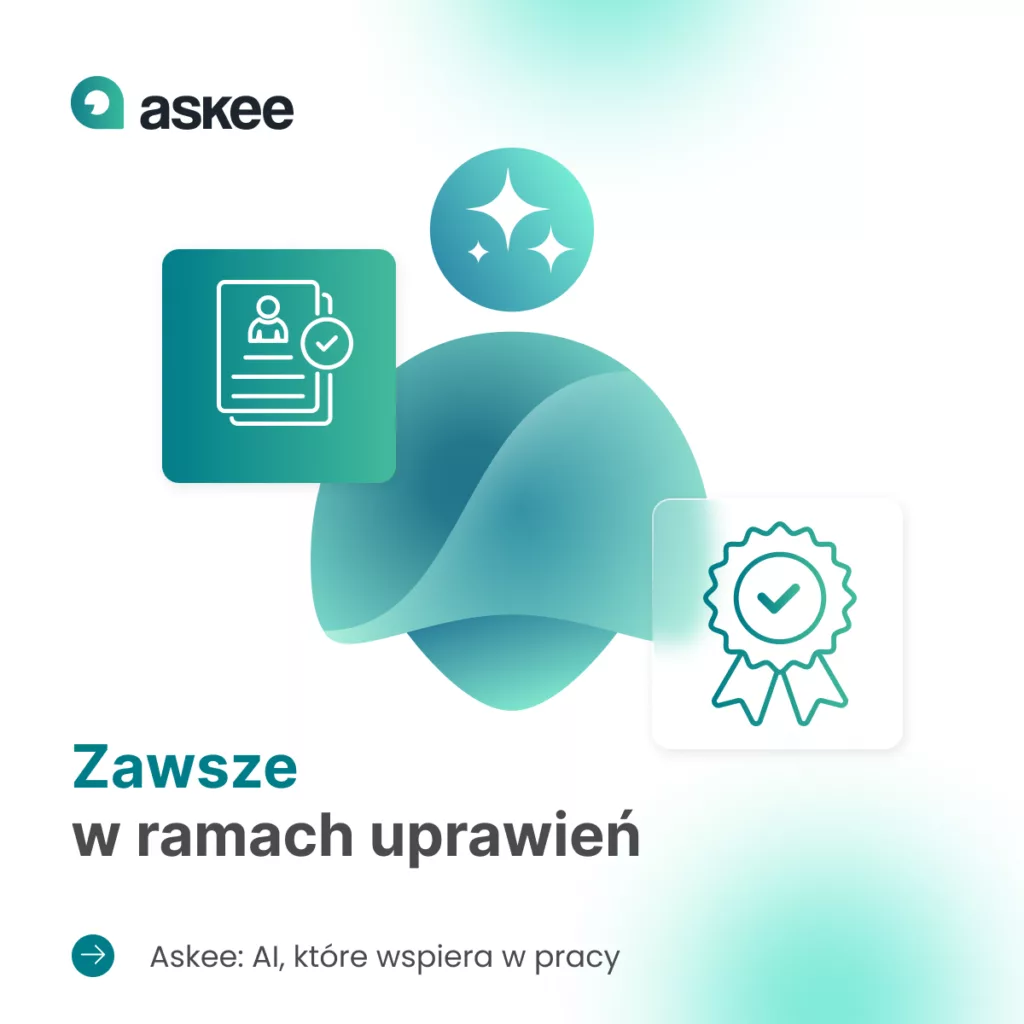
It works exclusively within the permissions it has been given.
It does not “guess” missing information – if it has no access, it does not try to work around it.
It does not look where it should not.
It does not combine information an employee has no right to access.
If someone has no access to certain data – askee has none either.
If a department sees only its own part of the processes – askee sees exactly the same.
This is not a limitation. It is the foundation of trust.
In a world of growing regulatory requirements, audits and board-level accountability for the use of AI, the sentence “I do not have permission for that” stops being a weakness of the system. It becomes its greatest strength.
Because the maturity of a technology does not lie in being able to do everything.
It lies in knowing when it should not.