Artificial intelligence
Companies roll out AI but forget to teach it their own operating rules.

Why does a conversation with AI so rarely end with a closed case? In companies, the answer is only the beginning – afterwards you have to act. The data shows the greatest value comes from systems plugged into real processes, not just into conversation. If AI is to speed up the business, it has to lead to a decision and to execution. Otherwise it remains just an intelligent chat.
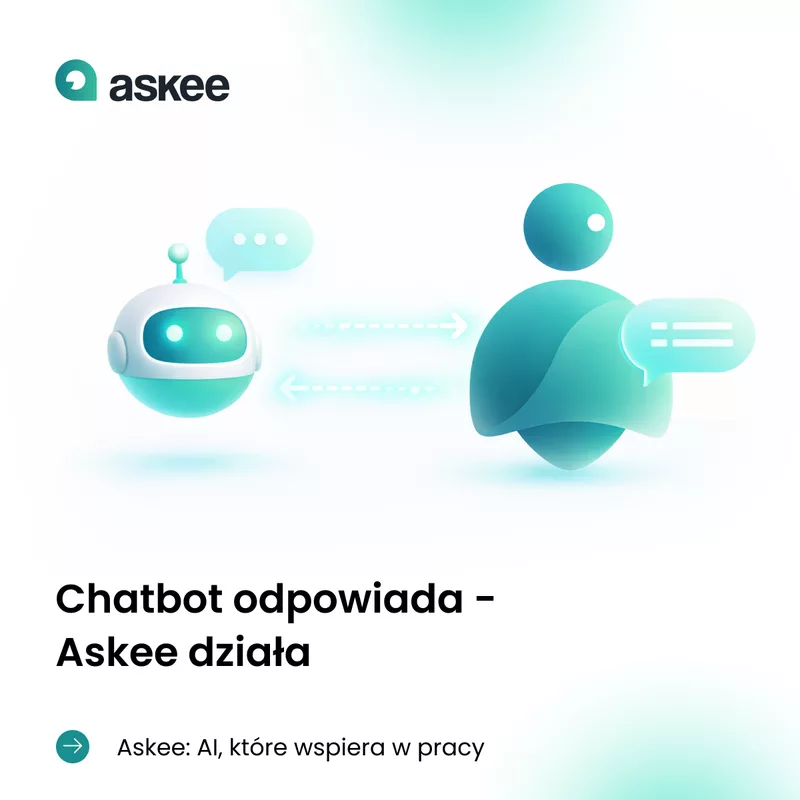


A typical chatbot answers user questions. It is linguistically capable, fast and convenient. But in practice it remains a tool for conversation.
And a conversation – even a very good one – rarely closes a case.
In organizations most topics do not end with an explanation. After the answer, something still has to be completed, approved, passed on; a decision status has to be checked or the next step in the process triggered. If the system stops at “let me explain”, accountability and action go back to the human – often in a different tool.
This is not a detail. It is the difference between information and execution.
McKinsey & Company’s report “The State of AI 2025” shows that organizations achieving the highest business impact from AI integrate it directly into operational processes. Conversational interactions alone – with no connection to a workflow – rarely translate into a measurable rise in productivity or shorter delivery times.
Gartner reaches similar conclusions in its 2025 analyses: companies that limit AI to the information layer more often treat it as auxiliary support. Where AI systems are embedded in decision-making and task processes, however, project delivery speeds up and accountability becomes clearer.
This shows one thing clearly: business needs processes that are closed.
Every process – whether it concerns HR, sales, finance or operations – has to be carried through to the end. Otherwise it remains an “open thread” that generates additional costs in time and attention.
That is why askee was not designed as a chatbot for conversations. It is an operational assistant that works according to the rules the organization runs on.
When a user asks a question, askee does not only explain.
It guides them through the next steps – in line with the role, the permissions and the company’s procedures.
If data has to be completed – it starts that stage.
If a decision requires approval – it points to the right person.
If the process has a next step – it leads to it.
If the case should be passed on – it does so within the defined structure.
This is a fundamental change of approach.
AI stops being an add-on that people “use sometimes”. It becomes part of the working environment – supporting not only understanding, but also action.
A chatbot answers.
Askee acts.
And it is precisely this difference that decides whether artificial intelligence remains an interesting tool or becomes real support for an organization’s effectiveness.