Artificial intelligence
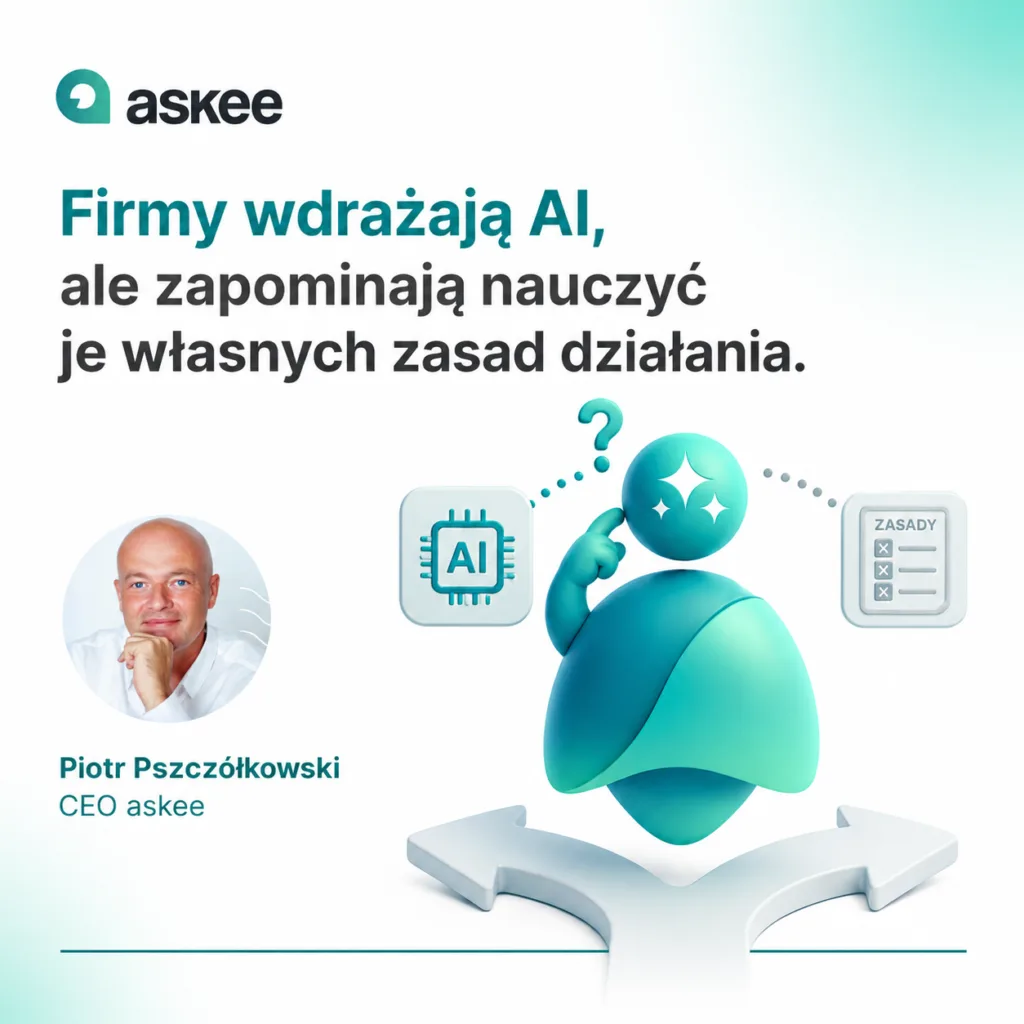
Companies roll out AI but forget to teach it their own operating rules.

Why does work slow down instead of speeding up after yet another system goes live? The problem is rarely a lack of features. More often it is too many tools and constant context switching. The data shows that it is precisely the fragmentation of the working environment that lowers team productivity. If technology is to help, it has to simplify – not add more screens and more decisions.
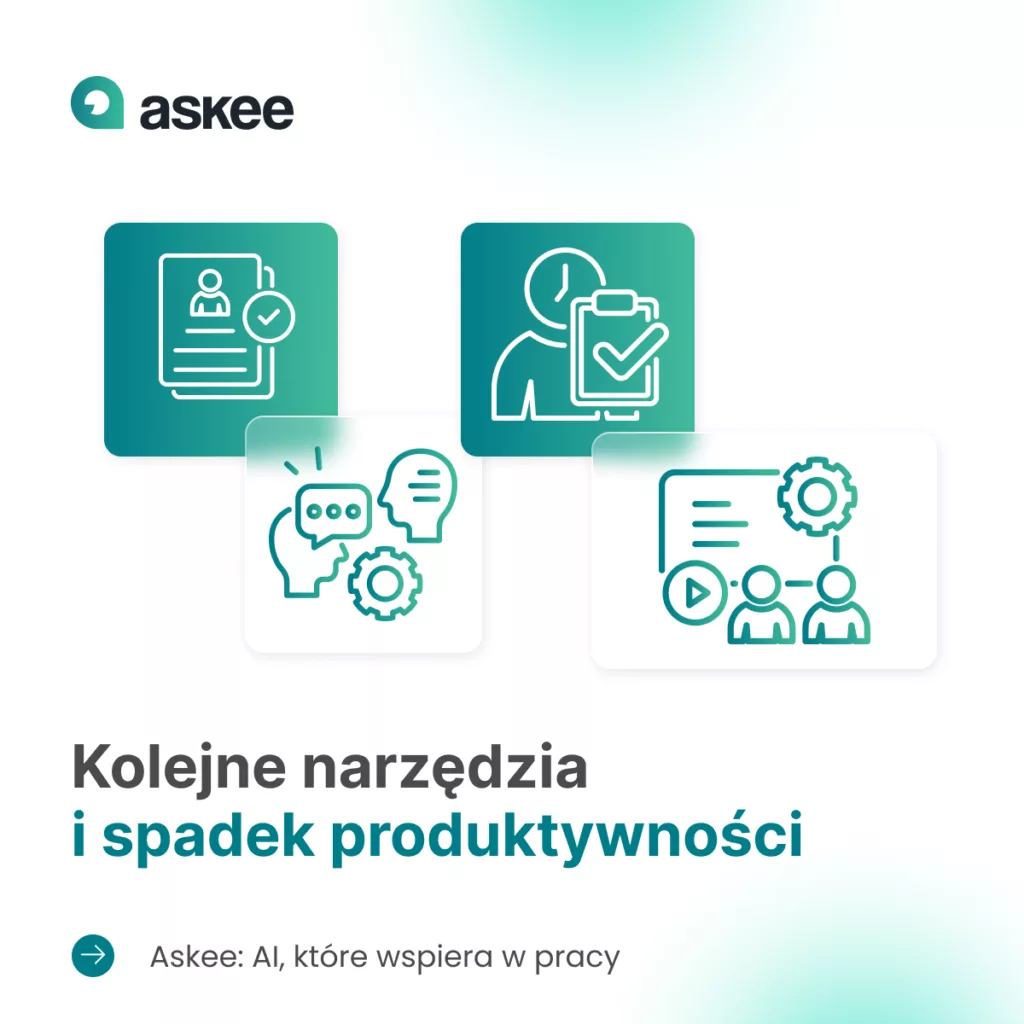


We added a new system to the company. It was supposed to streamline work, bring order to processes and increase control. And productivity… fell. Why?
Because every new system costs attention.
It takes time to roll out.
It requires a decision: “where do I do this?”
It splits information across yet more tools.
It creates its own logic and its own scope of accountability.
The result? More tools and less actual work. Sound familiar?
Counter-intuitively, productivity is rarely lost in the tasks themselves. Most often it is lost in switching between contexts. Every sign-in to another system means a break in continuity of thought. A mental reset. A return to the starting point.
Microsoft research in the “Work Trend Index 2025” shows that employees spend a significant part of the day switching between applications, and that the average working environment includes over a dozen different digital tools. Every such switch comes with a drop in concentration and a longer time to complete the task.
Gartner’s 2025 report, in turn, indicates that an excess of systems in an organization is one of the main factors reducing the productivity of knowledge workers. Companies that limit the number of touchpoints with technology and simplify the working environment achieve better project timeliness and higher team satisfaction.
So the problem is not that systems are bad. The problem is their fragmentation.
Imagine a manager who wants to deal with one single matter:
– check the sales figures,
– assign a task,
– verify the budget,
– confirm the decision with the team.
How many systems do they have to open? CRM, a project tool, the finance system, a chat app, e-mail? Each of them works correctly. But together they create an environment in which attention is scattered.
McKinsey & Company’s 2025 report on digital productivity indicates that the greatest losses in effectiveness come not from a lack of technology, but from too much of it and from a lack of integration. Companies that simplify the working environment and reduce the need to switch context see a marked rise in knowledge-worker productivity.
Productivity is not lost in the tasks. It is lost in the micro-pauses between them.
Every switch is a few seconds or minutes. Over a day – dozens of interruptions. Over a month – hours of lost time. Across an organization – a real operating cost.
So the question is not: do we need more systems?
The question is: how do we reduce switching?
Askee was designed as a layer that integrates the working environment. It is not another system competing for attention. It is the point where contexts converge.
Instead of opening five applications – you work in one place.
Instead of copying data between systems – you work with it in the context of the task.
Instead of wondering “where do I do this?” – you carry out the action within a single operational logic.
This is not a matter of convenience. It is a matter of the architecture of attention.
In a world with ever more tools, the real advantage is not adding another one. The advantage is simplifying the working environment and shortening the path from information to decision.
A new system should not increase the number of screens.
It should reduce the number of switches.
Because productivity does not rise when we have more features.
It rises when we can focus on one thing – without a context reset every few minutes.