Artificial intelligence
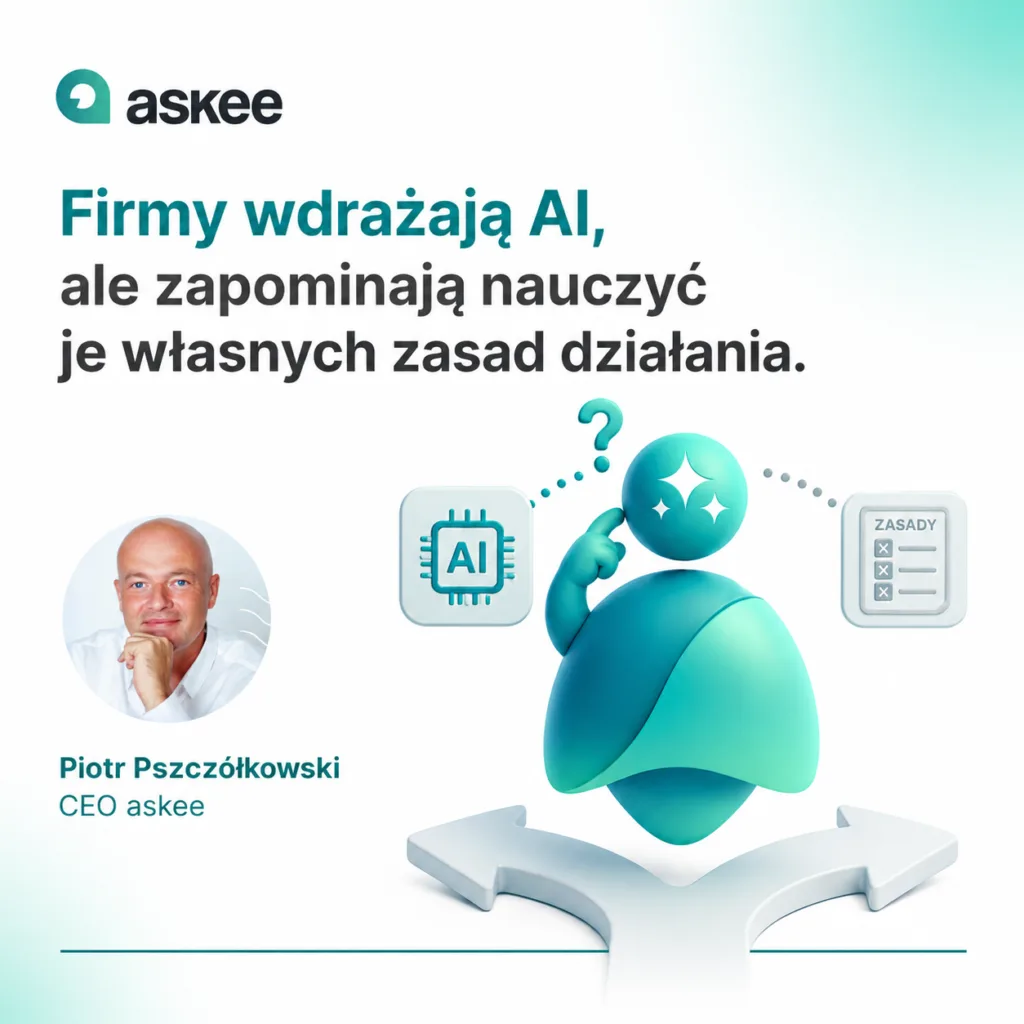
Companies roll out AI but forget to teach it their own operating rules.

An AI assistant can now recommend budgets, analyse team performance and support recruitment decisions. The technology makes it possible – the question is: where are its boundaries and who is accountable? The greater AI's capabilities, the greater the need for clear operating rules. In an organization the point is not that AI can do everything, but that it works within defined boundaries and a real...


Imagine a situation in which an AI assistant in your company writes communications to employees, recommends budget allocations, suggests recruitment decisions and analyses team performance. Technologically, that is possible today. Language models can process enormous amounts of data, identify patterns and draw conclusions faster than a human.
At this point, however, a key question appears – not about what AI can do, but about its boundaries and accountability.
Who is accountable for a budget recommendation?
On what basis does the system suggest one particular candidate?
Does the analysis of team performance take the full business context into account, or only the numbers?
The more advanced the technology, the greater the need for clear rules on how it operates. AI in an organization cannot function as an autonomous “adviser without a framework”. Without defined rules it quickly becomes a source of unease – for managers and employees alike.
That is why every responsible AI rollout should begin with a question: how does our company actually work?
How are decisions made?
What does the structure of accountability look like?
Which data is the source of truth?
What are the formal and informal rules of communication?
AI that “can do everything” should not, in practice, do everything. It needs a clearly defined scope of operation, defined permissions and control over its knowledge sources. Otherwise it starts working outside the organizational context – and that leads to chaos, inconsistency and a loss of trust.
When we designed askee, the starting point was not what the technology could do, but the need to bring order to how an organization works. Instead of building a system that generates any answer at all, we focused on creating a framework: defining roles, rules, scopes of accountability and decision logic.
Askee does not replace the manager. It does not take over accountability. It does not make decisions in a vacuum. It works within the boundaries the organization defines – supporting analysis, organising information and pointing to possible scenarios.
Mature use of AI is not about handing over control, but about deliberately defining its role. Technology can strengthen processes, speed up analysis and make decisions more consistent. The condition, however, is that it is grounded in clear rules.
Boundaries do not limit AI.
Boundaries are what make it safe, real support for the business.