
Artificial intelligence
AI training cannot only teach prompts

Poland can roll out AI more effectively than Europe – the data from Deloitte's report shows it. The best projects more often increase revenue and reach their return on investment faster than the European average. And yet, despite those results, we still do not turn these successes into a lasting competitive advantage. AI is rolled out cautiously, in isolated spots and mainly in “safe” efficiency a...



This is one of the most underrated conclusions from Deloitte’s recent report “Return on investment in AI: the Polish perspective”.
The report shows that the best-chosen AI projects in Poland are more effective than in Europe:
51% of the best AI rollouts in Poland increase revenue (Europe: 44%)
23% achieve ROI in less than 12 months (Europe: 13%)
To sum up:
✔️ we know how to roll out AI well
✔️ we know how to scale good use cases quickly
❌ but we rarely invest in them enough to build a competitive advantage for the country on the European market
Looking at many discussions on LinkedIn, as well as data from a range of reports, I see the following reasons:
most organizations choose “safe” efficiency projects
they treat AI as a selective tool supporting processes at some stage
they do not see AI as a holistic tool for everyday work which, knowing the context, can genuinely support decision-making
In short, by limiting the scope of AI use we do not see much benefit for our organizations. That is why many companies watch from the sidelines and roll out AI very cautiously.
From my perspective, new technology in the form of next-generation AI assistants must not be:
❌ a chatbot
❌ a document search engine
❌ another UI layer on top of old systems that want to prop up legacy technology with AI while giving users only selective benefits
It should be:
✔️ a tool that supports the decision-making process
✔️ an everyday assistant for managers and other functions in the organization
✔️ a system that knows the goals, roles, priorities and context of the organization
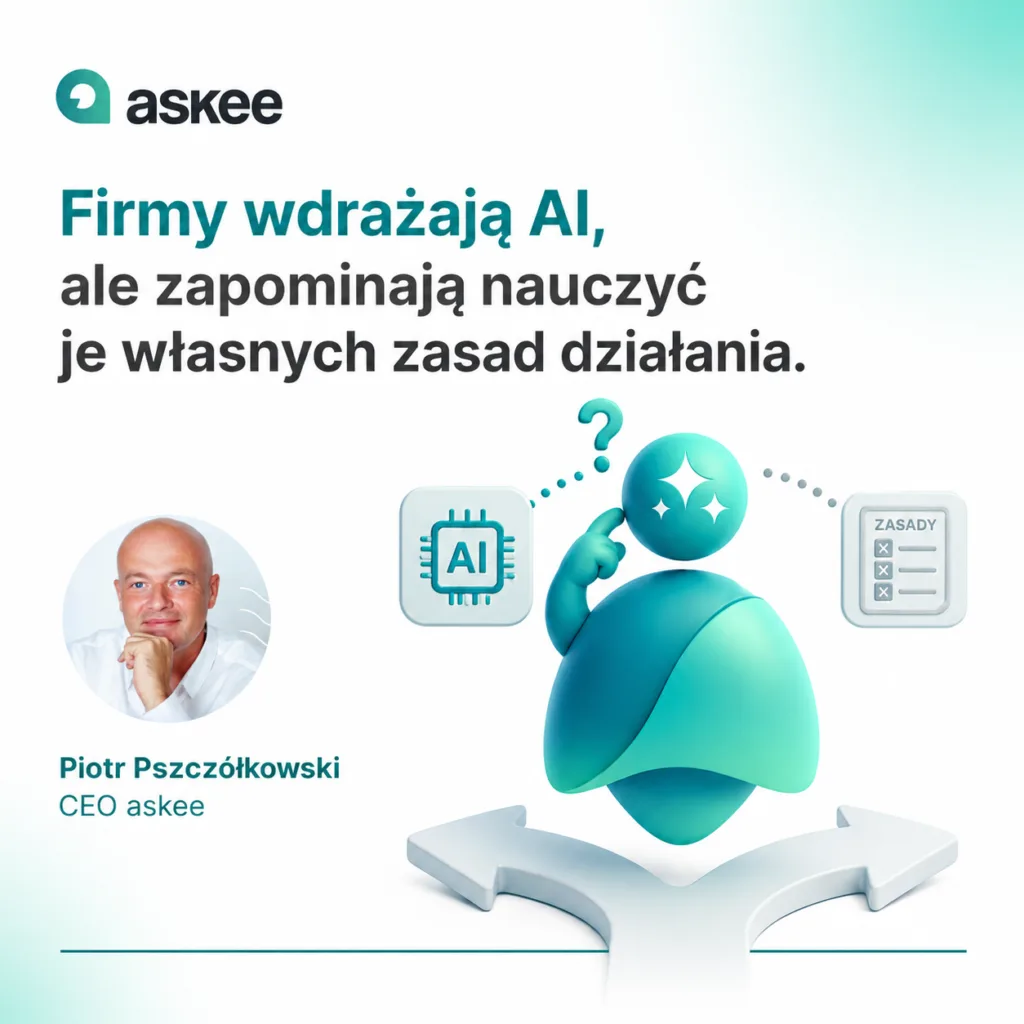
In my view the problem today is not AI technology. The challenge is how we see the role of that technology and the scope of its impact on our business.