
Artificial intelligence
AI training cannot only teach prompts

AI will not fail because of a weak model. It will fail where the organization has out-of-date documents, contradictory rules and unclear accountability. The real advantage will go to companies that teach AI their own way of working.
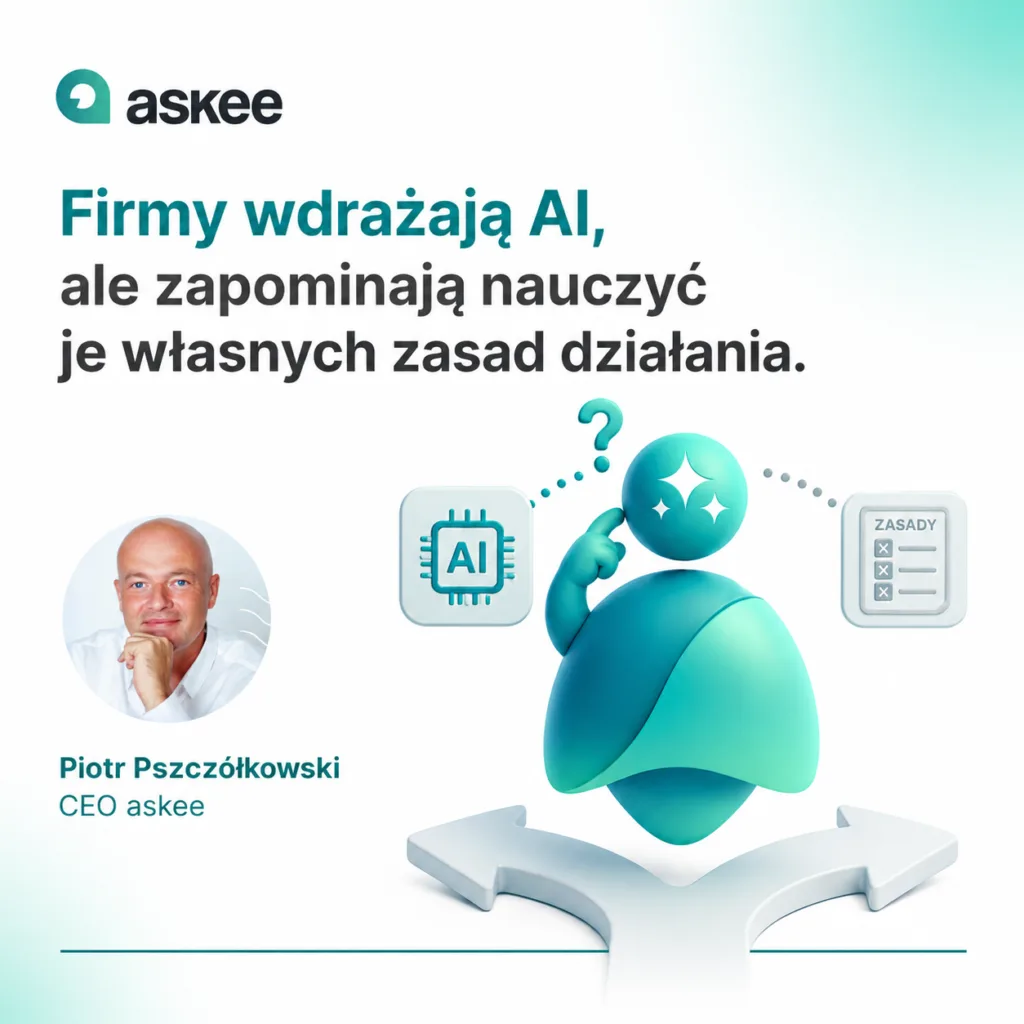


AI will not fail because of a weak model – the critical point will be poorly functioning organizations.
In the debate about artificial intelligence in companies we most often talk about models. Which is the best, which the fastest, which the cheapest, which the safest, which “reasons” better. Those are important questions, but I increasingly feel they are not the most important ones. The biggest constraint on AI in companies will not be the quality of the models. It will be the quality of the organizational knowledge those models are given to work with.
Because AI is expected to answer questions about an organization it does not really know. It does not know its rules, its exceptions, how it actually operates; it does not know which procedures are current, which documents take precedence, where the standard ends and the exception begins. It does not understand the management culture or the history of decisions. And yet we expect it to produce answers that are useful for the business.
It is like hiring a very intelligent consultant, locking them in a room with no access to documents, processes or people, and then complaining that their recommendations are too general. AI without organizational knowledge will sound good. But it will not necessarily work well. That is a fundamental difference.
A model can correctly describe what onboarding looks like “in theory”, but it does not know the specifics of the company. It can give good promotion practices, but it does not know the job levels. It can present an interpretation of remote work, but it does not know the organization’s local policy. And that is when a dangerous phenomenon appears: the answer is convincing, but not grounded.
Deloitte points out that as AI scales, companies focus increasingly on trust, governance and data quality. Access to the tool alone stops being an advantage. The advantage becomes the ability to build AI into the way the organization actually works.
That means one thing: companies should stop treating AI as an independent genius and start treating it as a new employee. A new employee is onboarded. You show them the company, explain the rules, walk them through the exceptions, give them access to the right documents and teach them the language of the organization. It should be the same with AI.
“Teaching AI the organization” does not, however, mean dumping PDFs into a knowledge base. That is a common mistake. AI can find a passage in a document, but that does not mean it understands its meaning in the company’s context.
What is needed is a layer of organizational context – covering structure, roles, permissions, applicable policies, data sources, the history of decisions and the exceptions. Without it, AI remains a capable but external adviser.
And an organization needs a system that understands the way it works.
An example? An employee asks about the possibility of working remotely from another country. General AI will answer: “that depends on company policy and tax law”. AI grounded in the organization should check the type of contract, the country, the remote work policy, the approvals required and the constraints of the role.
The difference between a general answer and an operationally useful one is enormous.
That is why the greatest advantage in AI will not come from the choice of model alone. Models will keep getting better and more available. The real advantage will go to organizations that put their own context in order.
Because AI is only as good as the information environment it works in.
If a company has contradictory procedures, out-of-date documents and unclear roles, AI will not magically fix that. What it can do is reveal the scale of the chaos very quickly.
And that is uncomfortable, but healthy.
AI forces companies to organise what they know about themselves. To answer the questions: what genuinely applies, who is accountable for what, which data is reliable and where information ends and a decision begins.
That may be worth more than generating answers.
So the question for leaders is simple: does your AI really know your organization? Or is it just very good at pretending it understands the business?